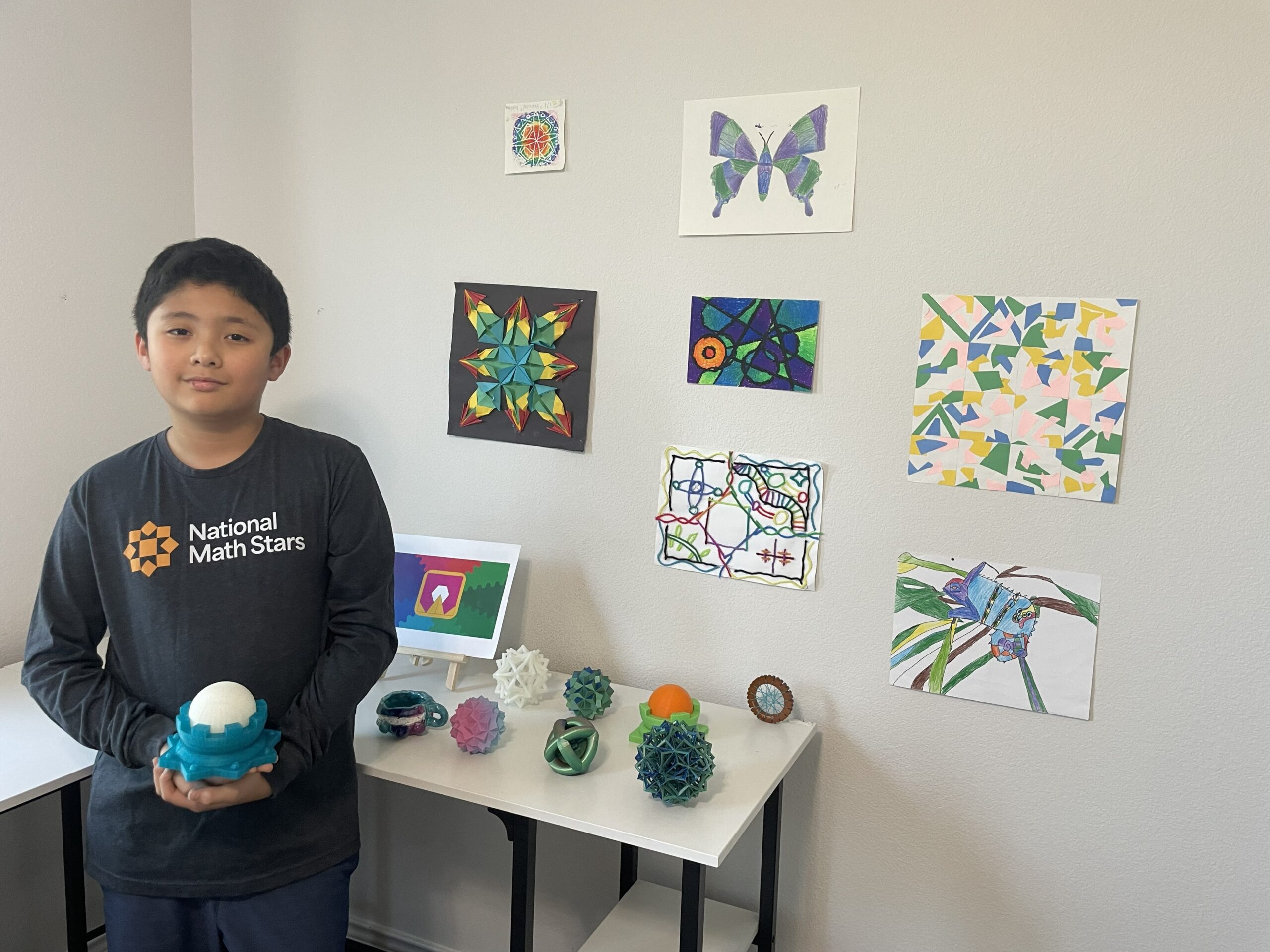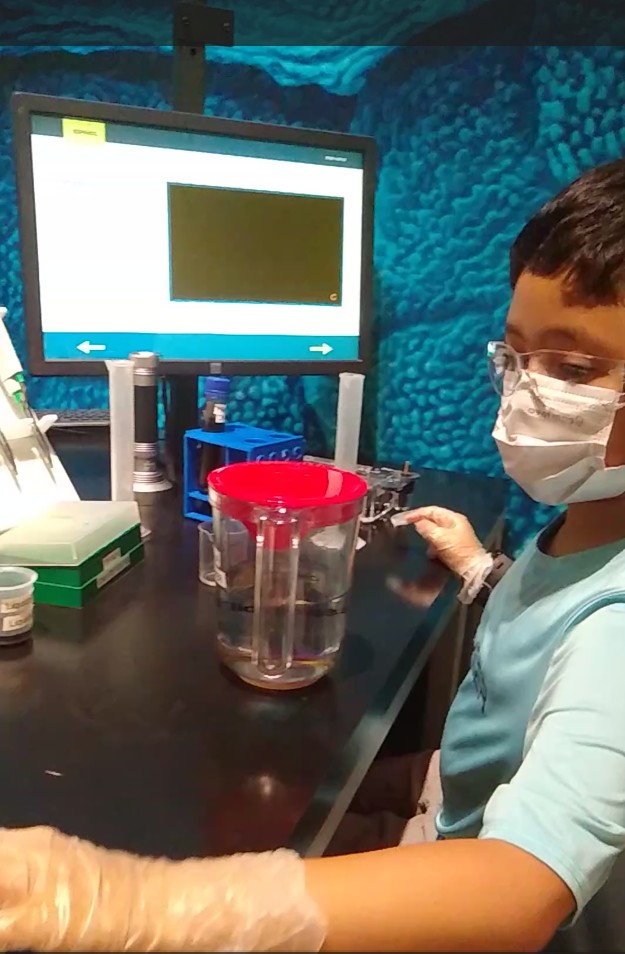

Daniel Godinez’s creative work offers the clearest glimpse into his unique mind. It could be the cellular automaton he rendered in Desmos, or the platformer game he’s coding in p5.js, or the 3D-printed fidget he modified in Bambu software. No matter the work, what stands out is his ability to seamlessly combine math and art.
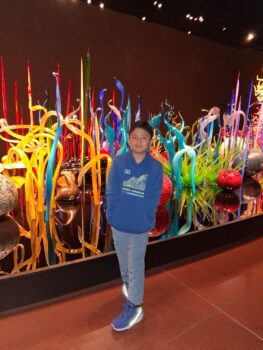 “I like geometric and mathematical types of art,” he says, explaining why Desmos—a suite of graphing, scientific, 3D, and geometry calculators—works as his primary creative platform. “One thing that intrigues me is all these cool patterns and things. That kind of inspires me,” he adds.
Daniel is 10 years old. He just finished sixth grade in Rockwall ISD, Texas, and he is already working on junior high-level math. His acceleration has been dramatic: he skipped first grade entirely and later jumped directly from fifth-grade math to Algebra 1. This coming school year, he’ll sit the second part of his geometry credit-by-exam test (he scored 97 on the first section), likely skipping geometry altogether to enter Algebra 2.
His parents, Francisco and Tuyen, noticed something was different before Daniel turned three. He was learning to read unusually quickly. One evening, Francisco was reading him a story they’d gone through many times and Daniel was reciting the tale verbatim. On a whim, Francisco decided to test whether Daniel had memorized the story or if he’d actually been reading. He turned to a page further down in the book, out of order.
“He started saying the words,” Francisco recalls. “I thought he probably just memorized it. But then I turned to a part that was further down. He was actually reading the words. I was like, ‘wow.’”
Daniel’s early reading ability placed him in his district’s SAGE Talented and Gifted (TAG) program in kindergarten, where he also scored at the 99th percentile in math. When he became eligible for the program, the school’s TAG coordinator suggested the family apply for National Math Stars. Daniel was accepted into the first Texas cohort.
The acceleration itself was smooth in some ways, complicated in others. Teachers expressed concerns about social-emotional fit, worried that skipping grades might leave Daniel isolated. Francisco and Tuyen took those worries seriously—they didn’t want him academically bored, but they also didn’t want him separated from peers outside the classroom.
“As a parent, you know your own child but you don’t know the [new] classmates. There’s this unknown: how are they going to treat him?” explains Francisco. “We don’t want him to be secluded. We want him to try to get along with as many kids as possible, whether they have the same interest as him or not.”
 As it turned out, those concerns were largely unfounded. Much like his ability to combine math and art, Daniel has no trouble switching between advanced mathematics and normal kid stuff. He takes swimming classes with kids his own age (backstroke is his preferred stroke), plays video games (Mario and Kirby series games are his favorite), and does art projects with schoolmates. He’s played soccer and basketball, though swimming is still his favorite sport. He is just as comfortable working alongside the older students in his accelerated math and science classes, and joins group cave tours to satisfy his interest in Geology.
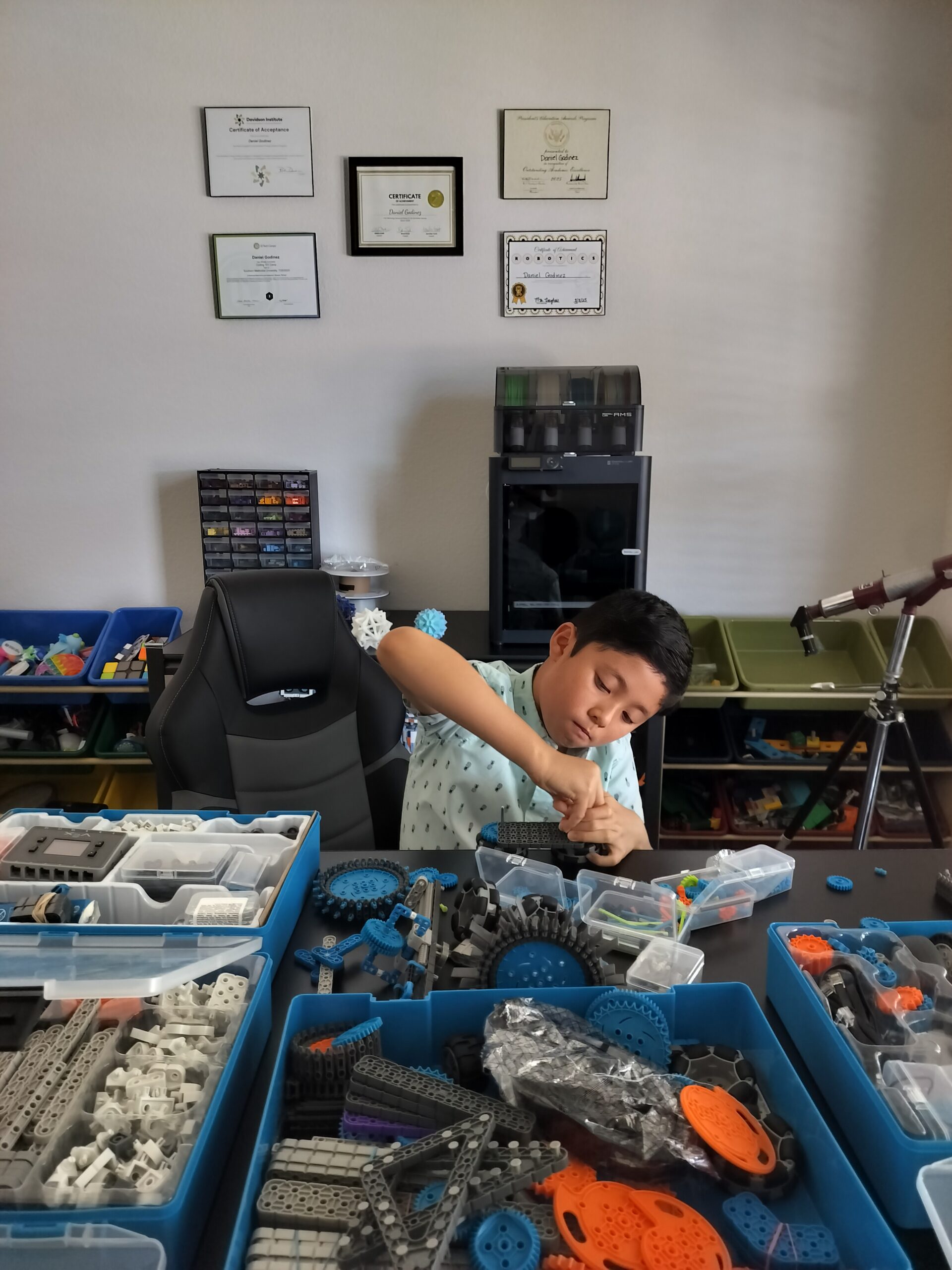
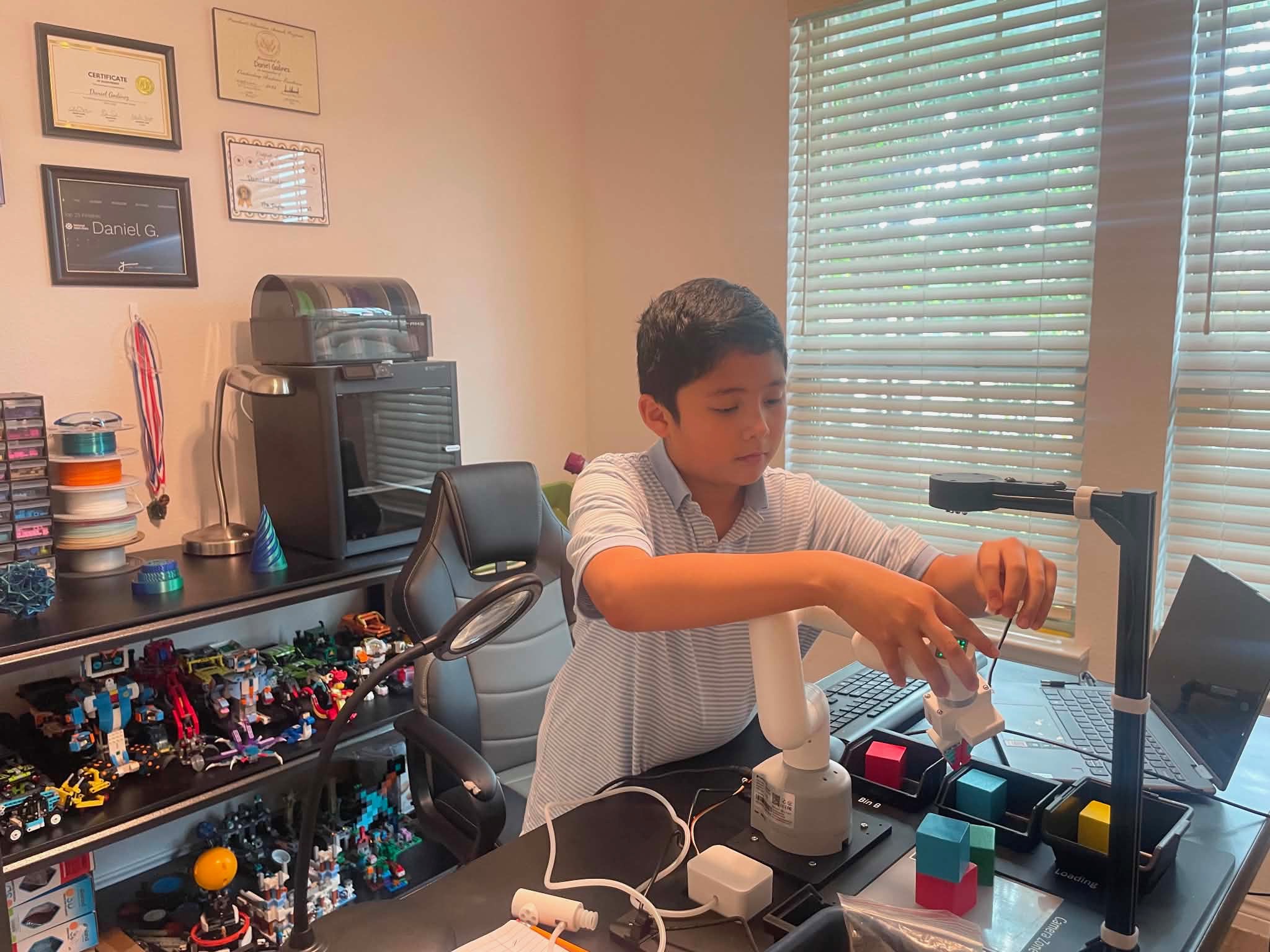
Yes, Daniel is a kid who gets along with people regardless of age, but he’s also adept working independently. When NMS provided him with a 3D printer, he designed and modified models with moving parts and UV-reactive filament. When he learned Python and p5.js through NMS-sponsored coding sessions, he began building a platformer game, a digital solar system, and color-cycling cellular automation.
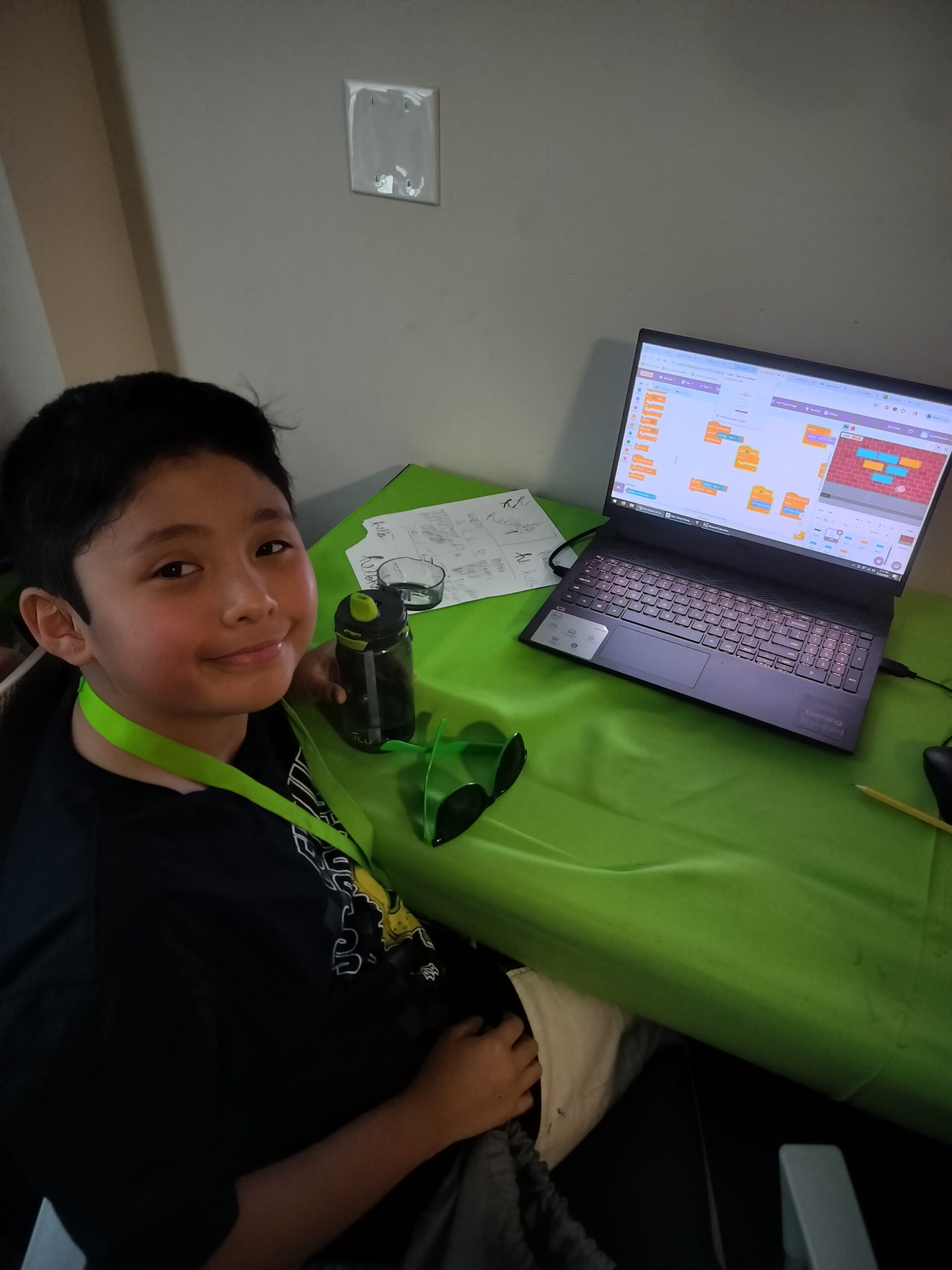
He’s experimented with Scratch, attended a local arboretum STEM camp, participated in Synthesis (a teamwork-focused program where he placed in the top 25), and logged hours in online coding and math mentoring sessions. This summer, with NMS’s help, he went to Epsilon, a camp for “exceptional young mathematicians.” It was his first time traveling outside Texas for a math program.
His parents have also developed a community through NMS. At their cohort’s Welcome Weekend, they met other parents who similarly navigate the challenge of raising children with exceptional abilities. Dallas-Fort Worth NMS meetups, held at parks and science centers around Dallas and Frisco, have given them a local peer group.
They’ll certainly lean on that community in the coming year as Daniel faces a big transition. His middle school doesn’t offer math beyond geometry, so if he passes his geometry credit-by-exam test, he’ll be bused to a local high school for Algebra 2. It’ll mean more logistics and time spent with even older students.
Daniel seems unfazed, and that’s not a surprise. A kid this adaptable, this comfortable combining skills and disciplines in his work and his life, should have no problem stepping up to a new challenge.